Microduct Cables

Maximize Duct Space, Minimize Installation Hassles with HFCL's Microduct Cables

These microduct fiber cables are tailor-made for compact conduits known as microducts, enabling network operators to rapidly address growing demand and capacity requirements by expanding their existing fiber networks. With three variants to choose from – standard, extra-thin, and ultra-thin – these microduct fiber cables are meticulously engineered to facilitate seamless installation, whether through blowing, jetting, or pushing.

Air Blown Unitube Cables (CFUs)

Ideal for metro networks, HFCL's blown unitube optical fiber cables feature central loose tube, small diameter, rugged jacket, UV stabilized, and are durable

Extra-thin Microduct Cables

Extra-thin microduct cables excel in 5G, streaming, and cloud computing. Their compact size ensures easy integration and high performance in tight spaces
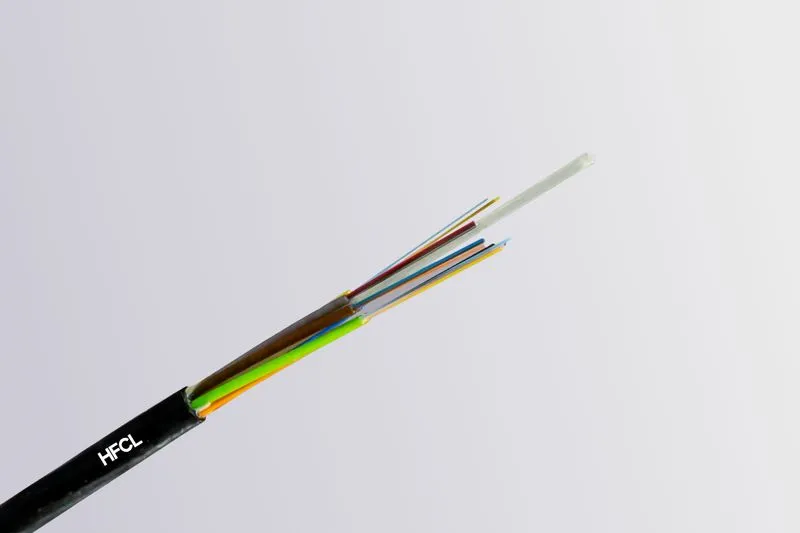
Nano-thin Cables

Gold Honoree nano-thin microcable excels in design, flexibility, and durability. Sets benchmarks in high packing density and cable jetting performance
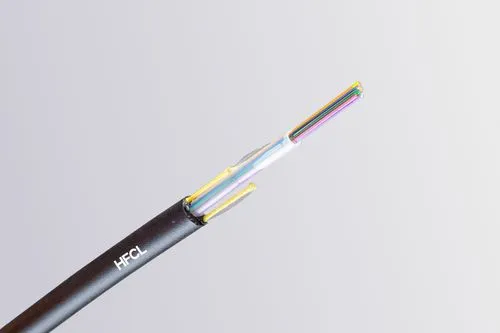
Standard Microduct Cables

Choose our microduct fiber cables for future-ready connectivity. Air-blowing design, unitube, and multitube options with HDPE and polyamide sheathing

Ultra-thin Microduct Cables

Upgrade and optimize your networks effortlessly with these optical fiber cables. Versatile fiber options- 4 to 576 fibers, diameters 5.0 mm to 11.3 mm
No items found.

NABL-accredited testing & certification facilities

Case Study

1000 metres in a Single Blow: HFCL's Optibend Unitube Mini Cable for FTTx Connectivity

HFCL took on a demanding FTTx requirement from a European customer to deliver a Unitube blown cable capable of reaching 1000 metres in an 8/5 mm microduct at 7 bar pressure. While the initial 24-fibre prototype showed promise, it fell short under real-world conditions. This led to a focused redesign. After 26 iterations and close collaboration with HTL Hosur, HFCL developed an optimized Optibend Unitube Mini Cable with a low-friction outer jacket, validated through rigorous testing, and proven to meet the customer’s performance expectations.
1000 metres in a Single Blow: HFCL's Optibend Unitube Mini Cable for FTTx Connectivity
1 / 3

Insights

No items found.

FAQs

What is a microduct in fiber optic networks?

A microduct is a small, durable conduit designed to house and protect optical fibers during installation and operation. Microducts enable modular, scalable, and low-impact deployment of fiber networks. They are lightweight, flexible, and compatible with air-blown fiber systems, allowing fast deployment over long distances with minimal joints. By reducing civil work, protecting fibers from environmental stress, and enabling easy future upgrades, microducts are ideal for FTTx, 5G backhaul, and urban fiber densification projects that require reliability, efficiency, and scalability.

How does microduct technology enhance air-blown fiber deployment?

Microducts are essential for air-blown fiber systems, allowing fibers to be installed quickly and efficiently over long distances with minimal splicing. Their lightweight, flexible design reduces installation time and labor costs while protecting fibers from mechanical stress and environmental hazards. Telecom operators can expand networks without major civil works, making microduct systems ideal for dense urban areas and remote regions. These conduits improve scalability, reliability, and performance of FTTx and 5G transport networks while future-proofing infrastructure for increasing bandwidth demand.

Are microducts suitable for urban and rural deployments?

Yes, microducts are versatile for both high-density urban networks and rural broadband deployments. Their lightweight and flexible design allows installation in congested ducts, micro-trenches, and long-distance aerial or buried paths. Protective features prevent environmental damage, minimize signal loss, and simplify maintenance. Telecom operators benefit from reduced installation costs, faster rollout, and future-ready scalability, making microducts ideal for expanding fiber connectivity in smart cities, remote communities, and national broadband initiatives