Aerial Cables

Reach New Heights in Connectivity with HFCL’s Patented Aerial Cables

Time consuming and complex installations are no longer a concern with HFCL's patented aerial cables for seamless outdoorand overhead use, guaranteeing uninterrupted connectivity in challenging conditions. These optical fiber cables simplify setup, minimizing downtime and cost. Suitable for diverse industries, from telecommunications to power distribution.
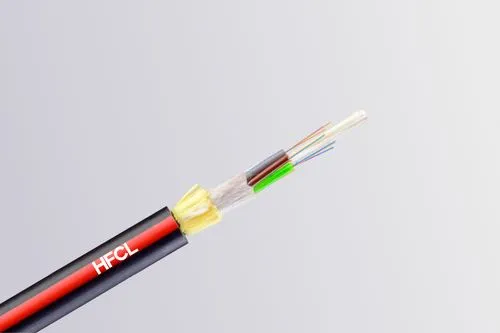
ADSS Cables

All Dielectric Self Supporting optical fiber cables for aerial networking: high-strength, self-supporting, lightweight, and non-conductive
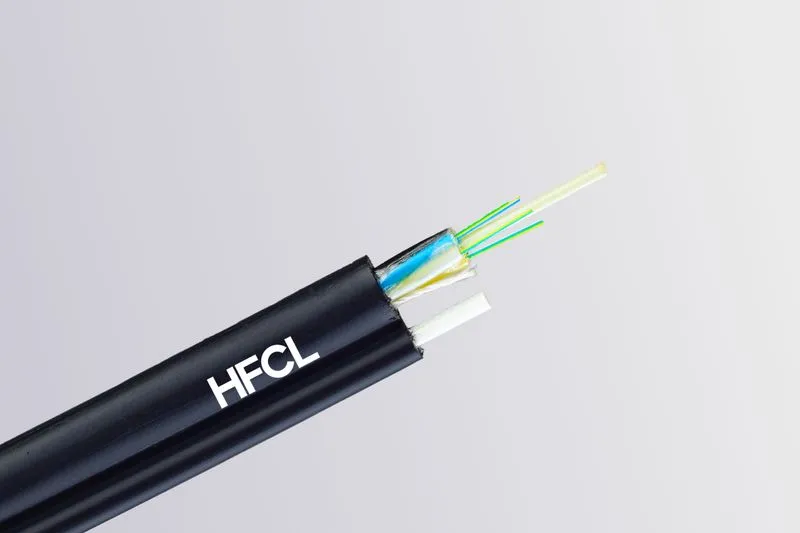
Aerial Fig. 8 Cables

Designed for self-supporting use, feature high-strength steel messenger wire for easy installation without separate support strands
No items found.

NABL-accredited testing & certification facilities

Case Study

Innovative Solution for India’s Top Telecom Player: HFCL’s 1F Outdoor Round Drop Cable for FTTx Deployment

A major telecom operator in India required a solution to address the failure rates of their existing drop cables. The cables were susceptible to damage from kite flying activities in North India, which could tear the outer jacket and expose the inner components. HFCL embarked on developing a robust 1F aerial round drop cable designed for both indoor and outdoor applications, aimed at withstanding harsh environmental conditions and ensuring reliable performance in FTTx networks.
Innovative Solution for India’s Top Telecom Player: HFCL’s 1F Outdoor Round Drop Cable for FTTx Deployment

UK's largest network operator Doubles Fibre Capacity with HFCL's 96F ULW Aerial Cable

HFCL developed a 96-fibre Ultra Lightweight (ULW) aerial cable solution that provided a significant boost in network capacity while maintaining a compact and lightweight design. This innovation allowed the customer to effectively double their fibre capacity without increasing aerial congestion or installation costs. The solution’s success is marked by its adherence to stringent performance standards and extensive deployment across the UK. Additionally, the design received a patent in April 2024, underscoring its uniqueness and technical advancement.
UK's largest network operator Doubles Fibre Capacity with HFCL's 96F ULW Aerial Cable
1 / 3

Insights

No items found.

FAQs

What are aerial fiber optic cables?

Aerial cables are optical fiber cables installed above ground using poles, towers, or messenger wires, offering fast and cost-effective network deployment. Designed for urban, suburban, and rural applications, they provide reliable connectivity with minimal civil work compared to underground installations. Modern aerial cables are weather-resistant, rodent-proof, and engineered for high-capacity broadband and telecom networks. Their flexible design supports FTTx, 5G transport, and long-distance deployments, ensuring low signal loss, easy maintenance, and scalable fiber infrastructure.

How do aerial cables support rural broadband connectivity?

Aerial cables are an economical solution for extending high-speed broadband to rural and semi-urban areas where underground deployment is costly or impractical. They reduce civil work, speed up deployment timelines, and ensure reliable last-mile connectivity for homes, schools, healthcare centers, and businesses. With weather-resistant and high-capacity designs, aerial cables maintain signal integrity over long distances and support growing broadband demand. They are ideal for bridging the digital divide and enabling inclusive, future-ready connectivity in underserved regions.

Are aerial cables suitable for 5G and FTTx networks?

Yes, aerial cables are increasingly used for 5G backhaul and FTTx deployments due to their high fiber count, low attenuation, and flexible installation options. They support high-speed data transmission, dense urban deployment, and long-distance coverage. Lightweight and mechanically robust, aerial cables reduce installation costs while ensuring scalability and network reliability. Operators can extend broadband and 5G services efficiently, future-proof networks, and meet the growing demand for high-capacity, low-latency communication across urban, suburban, and rural regions.