A2 Optical Fiber

Future-Ready Fiber for Expanding Broadband Networks

A2 optical fiber is a single-mode fiber offering exceptional bend resistance across a wide wavelength range of 1260 nm to 1625 nm. Its advanced design minimizes attenuation from bends, even at tight radii, ensuring reliable high-speed data transmission with low dispersion. This fiber is ideally suited for access networks and FTTH deployments. It meets or exceeds ITU-T G.657.A2 specifications.
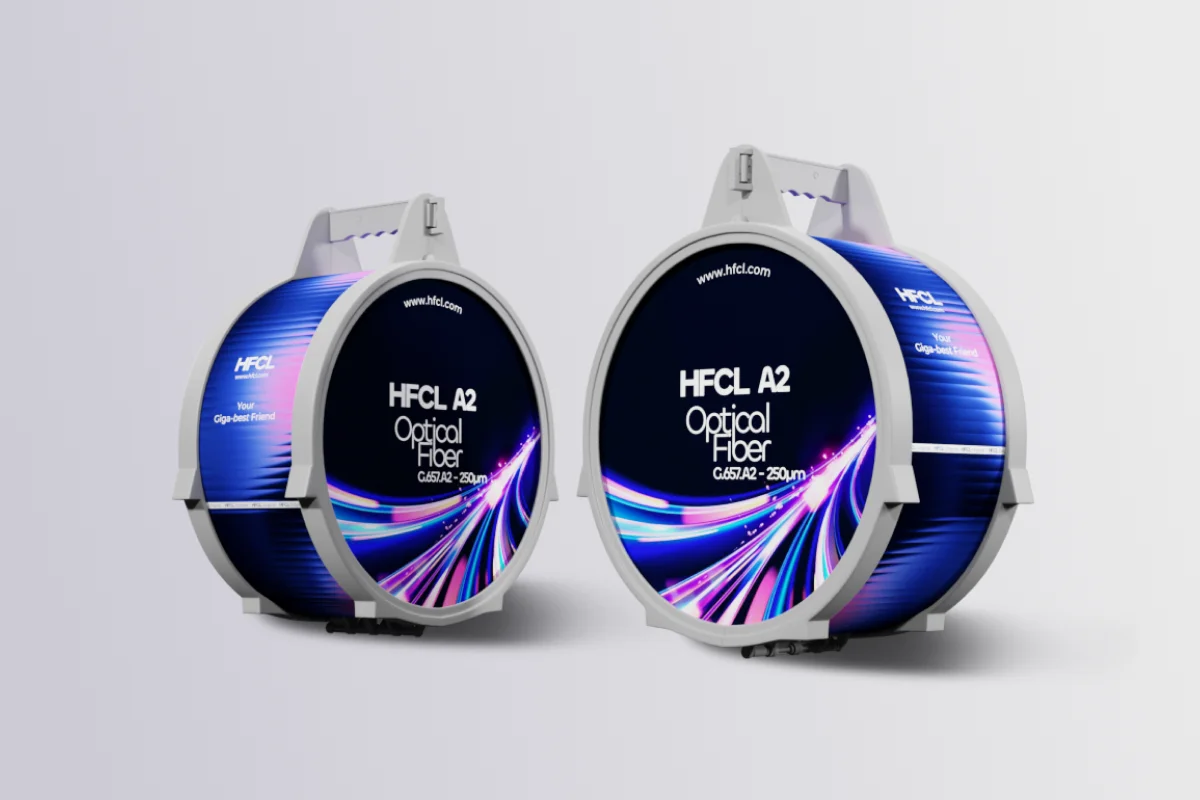
HFCL A2 Optical Fiber

HFCL A2 optical fiber goes beyond with enhanced bend insensitive performance, minimized losses, and engineered reliability, meeting the rigorous ITU-T G.657.A2 standards for seamless data transfer
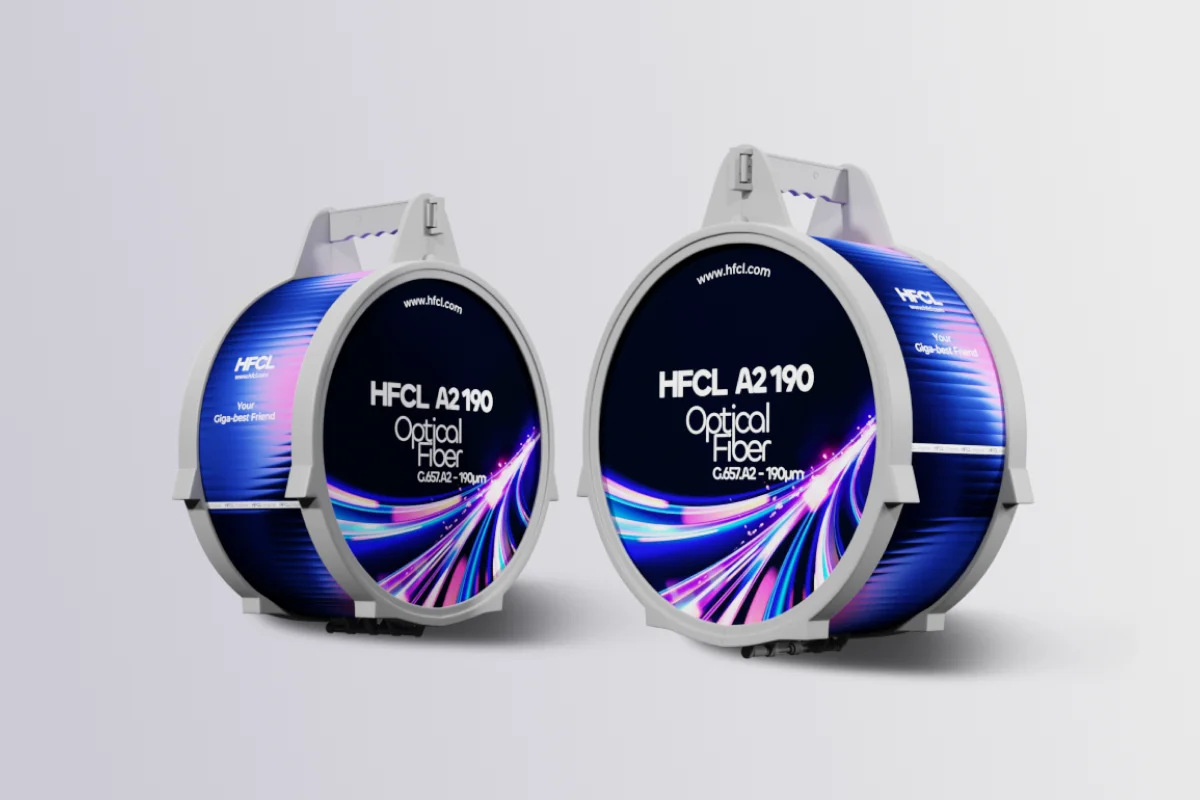
HFCL A2 180/190 Optical Fiber

HFCL A2 180/190 optical fiber is future-ready with bend resilient thin fiber, enhanced data transmission, and perfect suitability for high-density configurations, meeting the rigorous ITU-T G.657.A2 standards
No items found.

NABL-accredited testing & certification facilities

Case Study

No items found.
1 / 3

Insights

No items found.

FAQs

How do ultra-low-loss optical fibers improve long-haul network efficiency?

Recent research shows ultra-low-loss fibers achieve attenuation close to 0.12 dB/km at 1550 nm, enabling spans of over 1,500 km without amplification. This reduces infrastructure costs and supports high-capacity backbone networks efficiently.

Why is bend-insensitive fiber key for urban and FTTH deployments?

Bend-insensitive fibers maintain performance at tight radii — as low as 5 mm, with bending losses under 0.05 dB/turn. This enables reliable installations in cramped urban ducts, buildings and multi-unit homes without signal compromise.

What bandwidth capacities can modern optical fibers support for future networks?

Advanced fibers with large-effective-area designs support bandwidths well beyond 100 Gbps per channel, and total system capacities soaring into the terabit range for 5G/6G infrastructures. They are built to handle massive data for cloud, edge, and next-gen connectivity.

In what ways are optical fibers contributing to network sustainability and lifecycle value?

By requiring fewer amplifiers and being more durable, fibers cut power consumption and maintenance. For example, advancing designs show bending losses of 0.01–0.02 dB/km, lowering operational stress. These efficiencies support greener roll-outs and long-term cost savings.