Nano-thin Cables
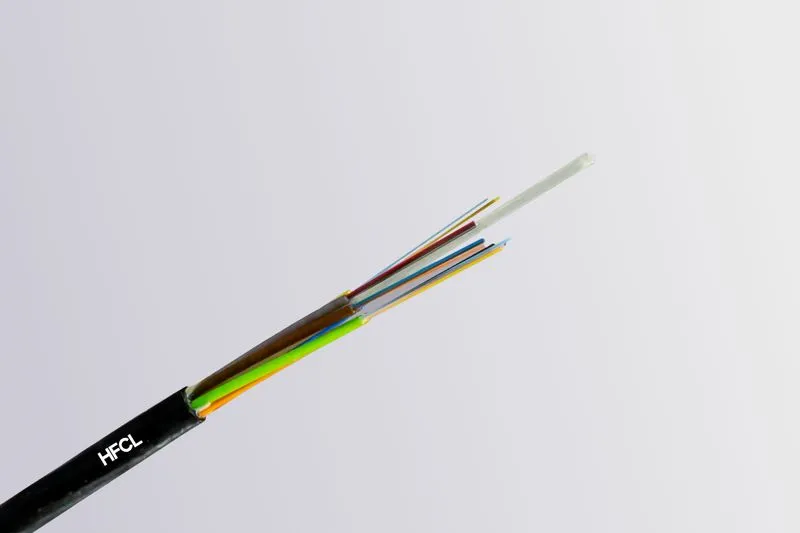
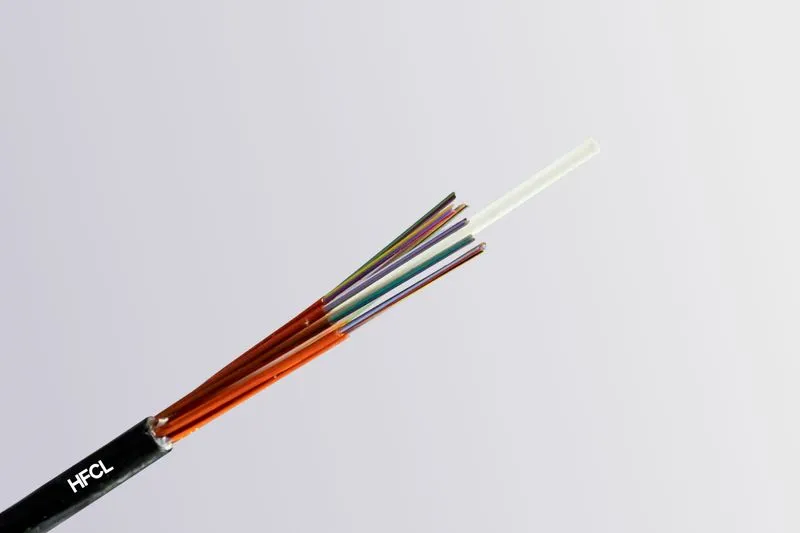
Award Winning Optical Fiber Microcable- HFCL’s Nano-thin Cables

About
Our nano-thin microcable has received the prestigious 'Gold Honoree' Award at the Cabling Innovators Awards, recognizing our commitment to revolutionizing connectivity. Our award-winning Nano-thin microcable stands out for its compact design, flexibility, ease of installation, ruggedness, and cost-efficiency. Ideal for data center interconnect and FTTx applications, it redefines standards with 200-micron fiber, ensuring superior packing density and cable jetting performance.
Features
Benefits
200-micron Fiber Boost
Enables higher packing density, faster jetting speeds, and longer distances for improved cable jetting performance
Compact and Efficient
14-34% increase in packing density, allowing the use of smaller microducts and enhancing overall network capacity
Smart Fiber Selection
This microcable utilizes cost-effective G.657.A1 fiber for efficiency without compromising quality, avoiding higher baseline attenuation
Extreme Resilience
Operates seamlessly in temperatures from -40 to +70 degrees Celsius, ideal for diverse microduct applications, including duct override
Efficient Installation
The jetting process reduces labor costs, boosting operational efficiency for network deployment projects
Standards Compliance
Strict adherence to ICEA-S-122-744 and IEC 60794-5-10 standards, validating performance in extreme conditions
Key Specifications
Applications
- Backbone network
- Feeder and distribution
- Microduct blowing
- LAN and FTTx
- Last-mile connectivity
Variants
FAQs
The size, or outer diameter, of an optical fiber is crucial for long-distance transmissions. Opting for a thin fiber is imperative to mitigate dispersion and minimize power loss. A thinner core ensures that light reflects less, follows a more direct path, and travels at a faster pace. This strategic design reduces modal dispersion, enhancing the efficiency of optical fiber communication.
The core, situated at the heart of the optical fiber, serves as the conduit for light transmission. In multimode fiber, the core size typically ranges from 62.5 to 50 microns (µm), while in single-mode fiber, it is approximately 8.3 microns. This dimension highlights the remarkable thinness achievable in fiber optic cables, allowing for efficient light propagation in various optical communication applications.
Nano-thin microcables excel in environments where space optimization is crucial, making them ideal for high-density data centers, telecommunications, and advanced optical communication systems.