Ultra-thin Microduct Cables
Upgrade, Expand, and Optimize your Networks Effortlessly with our Ultra-thin Microduct Cables


About
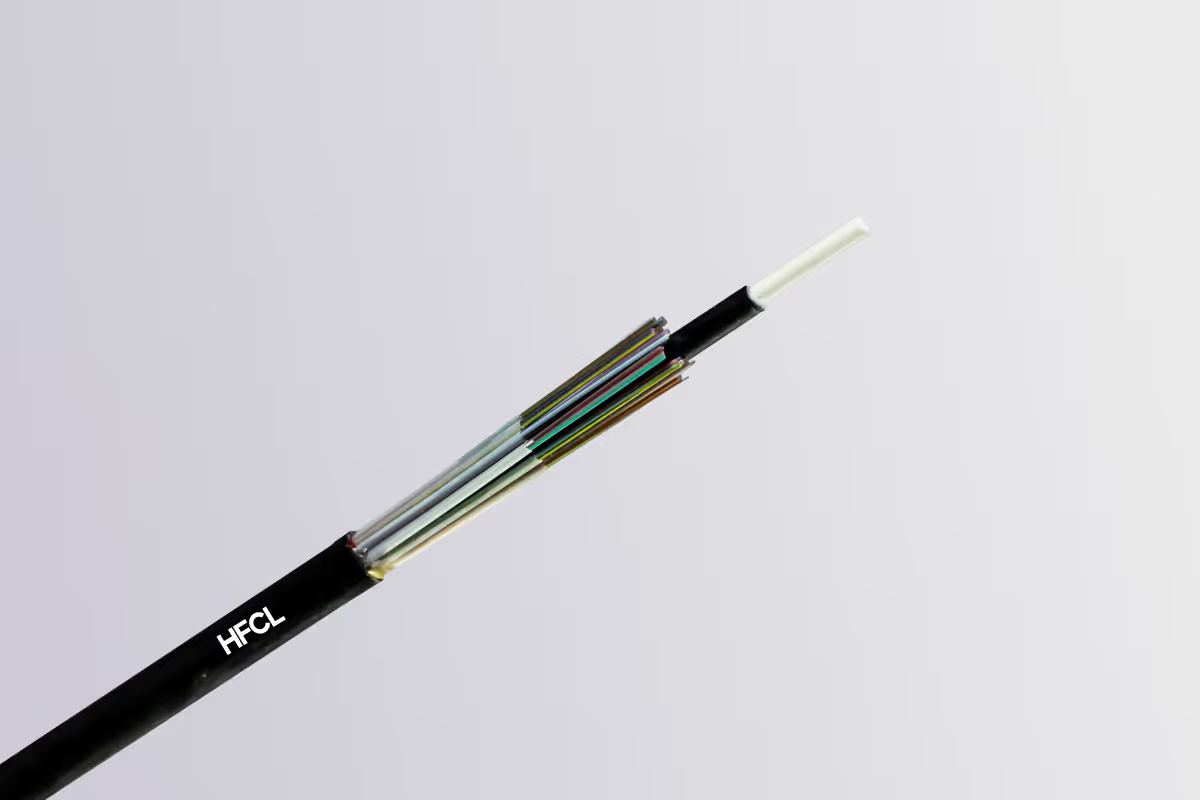
Get ready for the 5G race with our groundbreaking ultra-thin microcable featuring 200 µm fiber and an extremely small diameter. This ultra-thin cable sets a new standard for 5G networks, offering increased data capabilities in an exceptionally compact form. Our multitube ultra-thin cable, ranging from 4 fibers to 576 fibers, ensures versatility with diameters spanning from 5.0 mm to 11.3 mm respectively.
Features
Benefits
Low Diameter Multitube Thin Cable
This ultra-thin cable is one of the low-diameter multitube cables from HFCL in terms of diameter, optimizing space usage in your network infrastructure
Reduced Material Usage
With a focus on efficiency, our ultra-thin cables use fewer materials, making them eco-friendly and cost-effective
Save Space
High fiber density means you can do more with less space. Say goodbye to bulky cables and hello to streamlined connectivity
Lower Transport and Storage Costs
Compact optical fiber cables require less space for transport and storage, reducing logistical expenses
Efficient Installation
The reduced size of our optical fiber cables means you need less space and equipment for installation, leading to cost savings
Enhanced Stiffness and UV-stabilized Outer Jacket
UV-resistant properties enhance long-term durability and performance, even in challenging environmental conditions
Key Specifications
Applications
- Backbone network
- Feeder and distribution
- Microduct blowing
- LAN and FTTx
- Last-mile connectivity
Variants
FAQs
The blowing distance of an optical fiber cable in a microduct is directly influenced by factors such as the cable's weight, friction from the microduct, and the applied pressure. These elements collectively determine the cable's ability to traverse the microduct, impacting the achievable distance. Consultation with professionals is recommended for precise blowing distance calculations, considering specific cable characteristics and installation conditions.
Microduct cables are advantageous in various environments, especially in urban settings and areas with limited space. Their small size and flexibility make them suitable for discreet installations, contributing to efficient and unobtrusive network deployments.
Ultra-thin cables find common deployment in various network scenarios, including backbone networks, feeder and distribution setups, microduct blowing applications, LAN installations, and FTTx deployments, and play a crucial role in last-mile connectivity. Their versatility makes them suitable for a wide range of network infrastructure requirements.