The Core of Future-ready Connectivity: Powering Next-Gen Networks with HFCL Optical Fibre Cables

Fibre Optic Cables by HFCL

Quality, Customized, and Future-Proof Optical Fibre Cable SolutionsServing the high bandwidth needs of telcos, network operators, enterprises, and industries

Advancing the world's optical fiber technologies since 1987

Tailored for Every Need

We have a diverse range of optical fibre cables tailored to meet the diverse needs of networks across various sectors, including businesses, residences, and industries. Whether you're seeking connectivity for commercial endeavors, home use, or industrial applications, we offer a comprehensive range of options to suit every scenario.

Industry-leading Certifications
 and Compliance

With a commitment to excellence, most of our cables are certified by Telcordia GR-20-CORE and ICEA S-87-640, ensuring superior performance across varied geographical landscapes, demanding environmental conditions, and rigorous operational requirements.

Delivering Solutions in
 Record Time

Our track record speaks volumes: customers consistently praise our ability to provide superior quality solutions precisely tailored to their needs in record time. At our core, we're dedicated to listening intently and exceeding expectations with every delivery.

Your Partner in Building 
Future-ready Networks

While many discuss innovation, we embody it. Our high-quality solutions are meticulously engineered to meet the demands of today's networks. Powered by state-of-the-art R&D facilities, we consistently pioneer futuristic solutions, ensuring you stay at the forefront of technological advancements.

What our partners say

An intelligent redesign of traditional armored cable, this design is innovative. It appears to save some time with workability per the time study findings, which always brings benefit to the business. Most notably is its reduced bend radius requirements and environmental footprint from a manufacturing material perspective.
Panel of ISE Network Innovators' Awards 2024
I would like to place on record my sincere appreciation for entire HFCL team for the hard work, positive approach, and dedicated attitude towards the delivery of BNG Project in the region. During the project implementation, HFCL team has shown marvellous performance and milestone achievement for on-time delivery, installation, and integration of Control Plane, RPOP at BBNW Circle Chandigarh. I would also like to extend my sincere thanks to HFCL team for their support and would expect the same in future for maintenance of sites without any delay. Further, I wish you the very best for future endeavours with BSNL.
Mr. Rajesh Sharma
Principal General Manager, BBNW Circle, Chandigarh

A fiber optic cable solution for every application
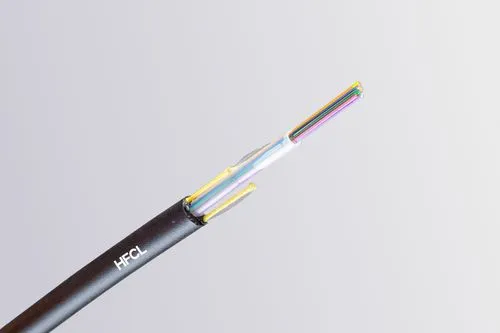
Optical Fiber Cables
Microduct Cables
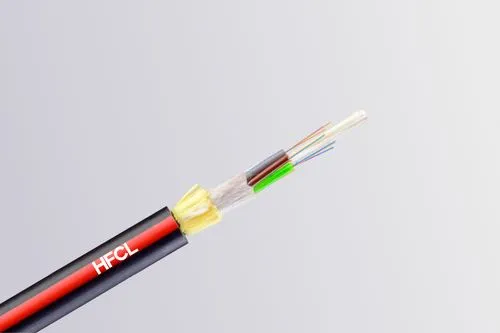
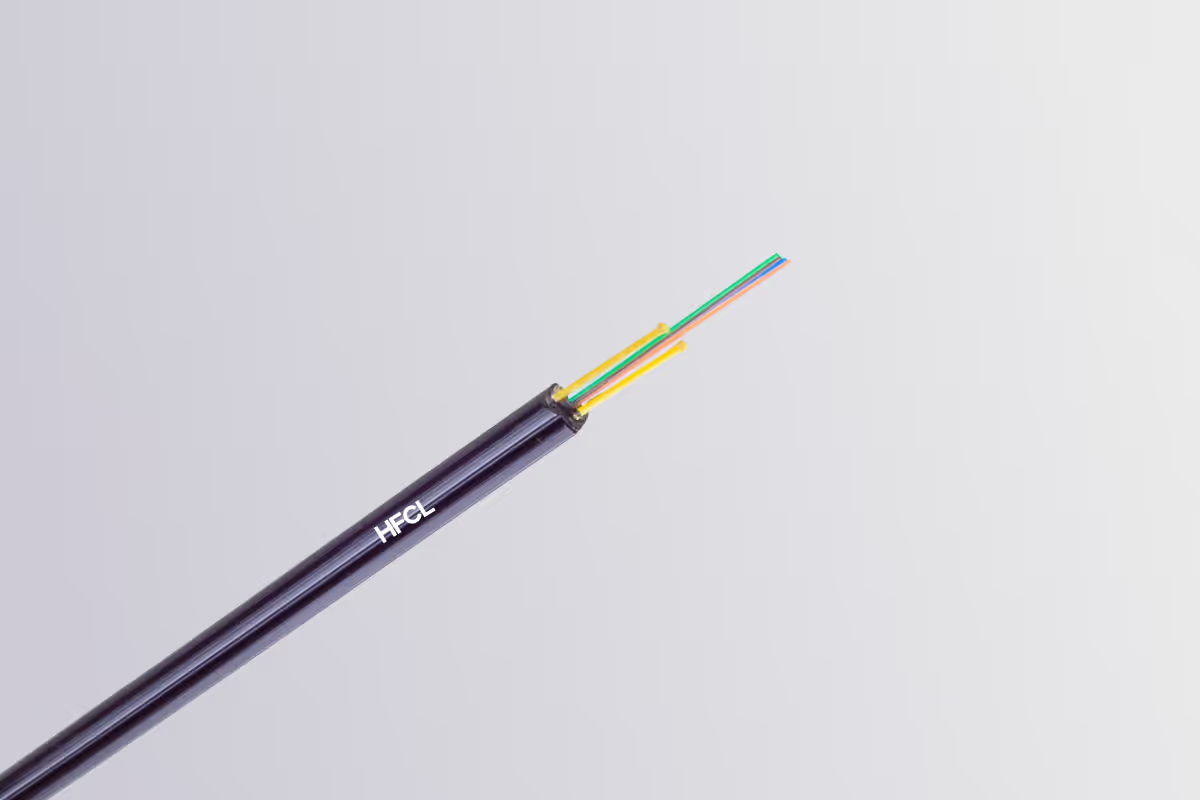
Elevate your network affordably without compromising on quality. Experience unparalleled network upgrades with HFCL's air blown cables. Precisely designed for diverse networking needs—backbone, LAN, FTTx, and last-mile connectivity—our optical fibre cables offer high flexibility, durability, and efficient installation. Featuring a gel-free core for superior water-blocking, sheath for extended blowing distances, and compatibility with multiple Fiber types, they ensure consistent, high-performance across extreme temperatures.
Optical Fiber Cables
Micromodule Cables
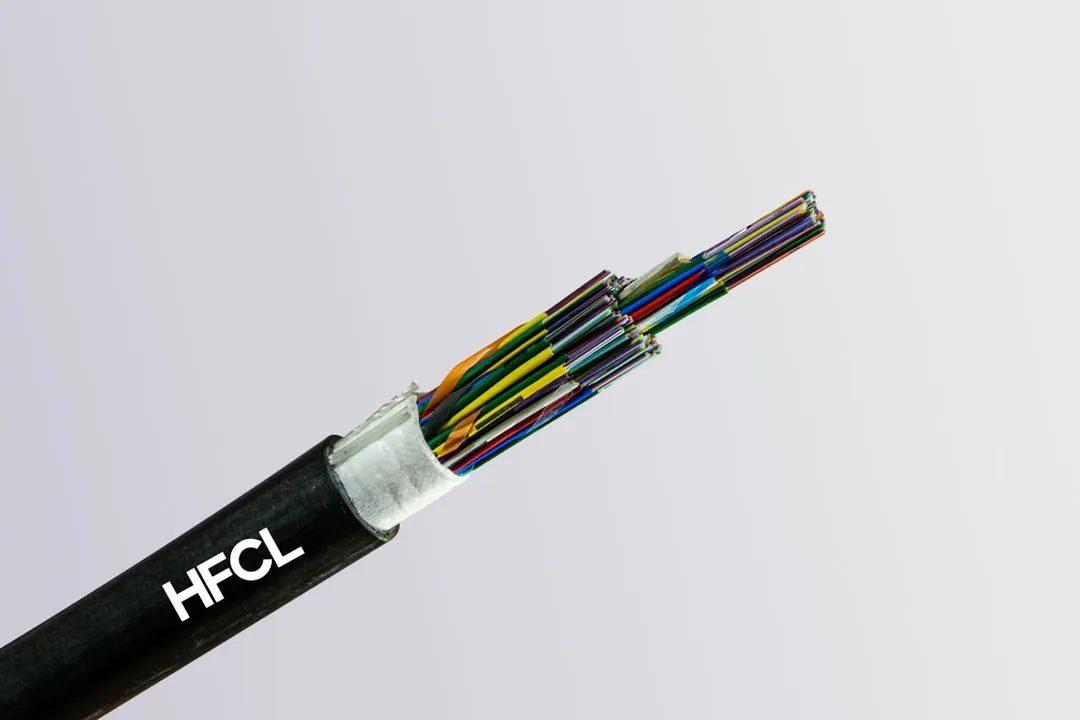
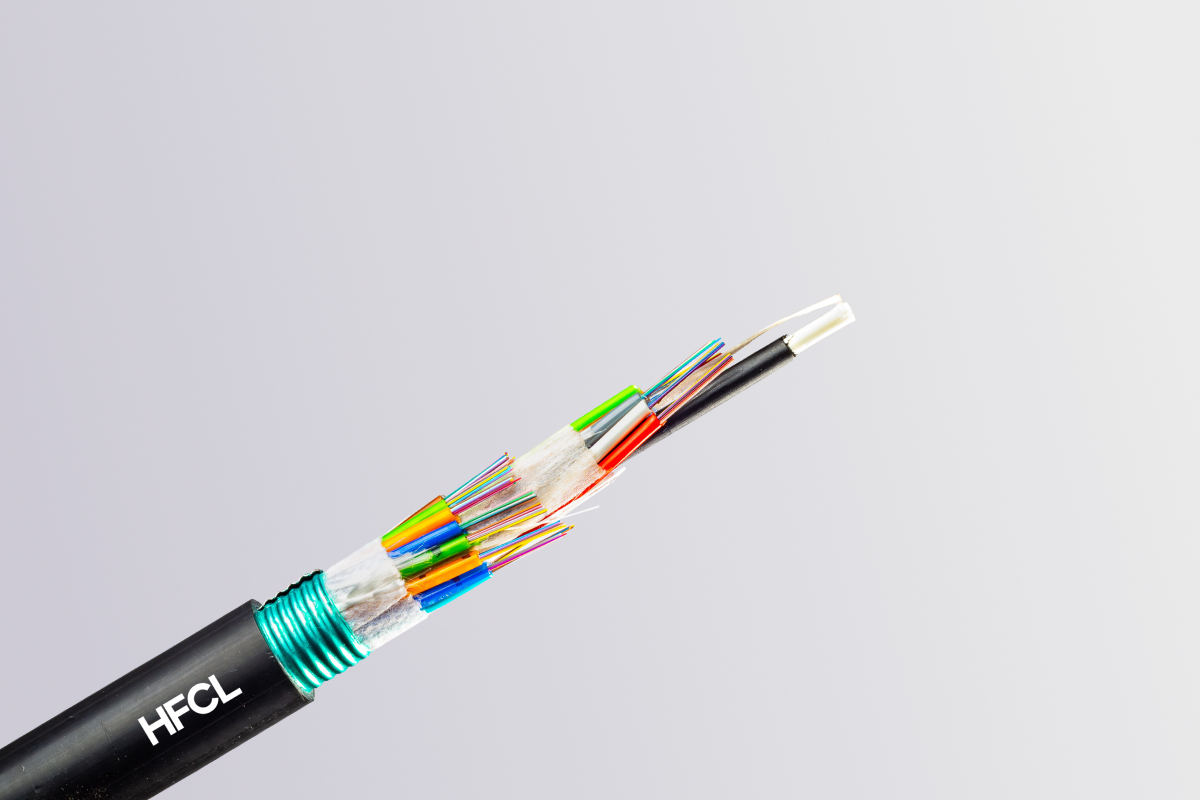
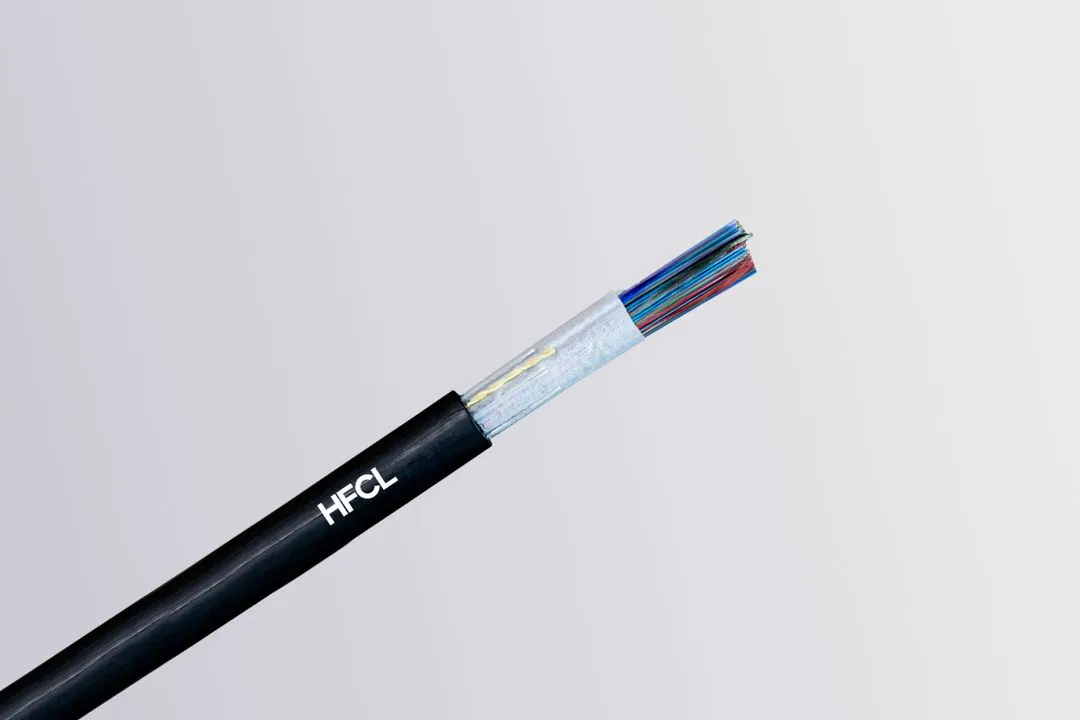
Designed for effortless midspan accessibility, our micromodule cables offer easy Fibre access without the need to cut the cable. Ideal for various network applications, including midspan installations, backbone, access, feeder, distribution, and last-mile networks. With Fibre counts available from 6 to an impressive 864 Fibres, we ensure comprehensive coverage for all your connectivity requirements. Trust in our micromodule cables to streamline your network installations with ease and efficiency.
Microduct Cables
Standard Microduct Cables
Our standard microduct cable is meticulously crafted for air blowing within microducts, offering reliable performance. Available in both uni-tube and multi-tube designs, with sheathing options of HDPE and polyamide, our microduct cable ensures versatility and reliability. Choose from uni-tube construction ranging from 2.5 mm up to 12 Fibres, or multi-tube construction spanning 5.8 mm to 11.8 mm, accommodating Fibre counts from 4 Fibres to 432 Fibres.
Microduct Cables
Ultra-thin Microduct Cables
Revolutionize your network with our ultra-thin microduct cable, engineered for the high-speed demands of 5G. Boasting a slim profile with diameters from 4.3 mm to 1.2 mm, our cable supports 4 to 576 Fibres, optimizing space and enhancing data capacity. Designed for effortless installation with a low friction coefficient and UV resistance for outdoor durability, it’s the perfect upgrade for efficient, flexible networking solutions.
Aerial Cables
ADSS Cables
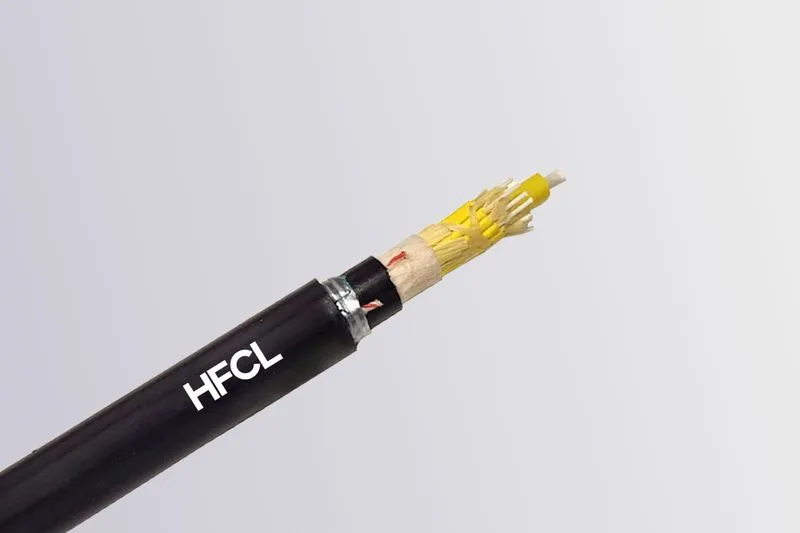
Engineered for optimal performance, these optical fibre cables feature high-strength aramid yarns, reducing the strain on towers from cable weight, wind, and ice. With internal glass optical Fibres receiving steadfast support, expect minimal optical loss over time. Our ADSS cables are jacketed for moisture protection and UV shielding, making them ideal for backbone, feeder, and aerial spans, catering to applications from CATV to LAN and FTTx. Perfect for overhead pole-to-pole deployment, these Fibre optic cables offer a cost-effective and swift installation compared to underground alternatives.
Optical Fiber Cables
Aerial Cables
Optical Fiber Cables
FTTH Cables
FTTH Cables
Flat Drop Indoor Cables
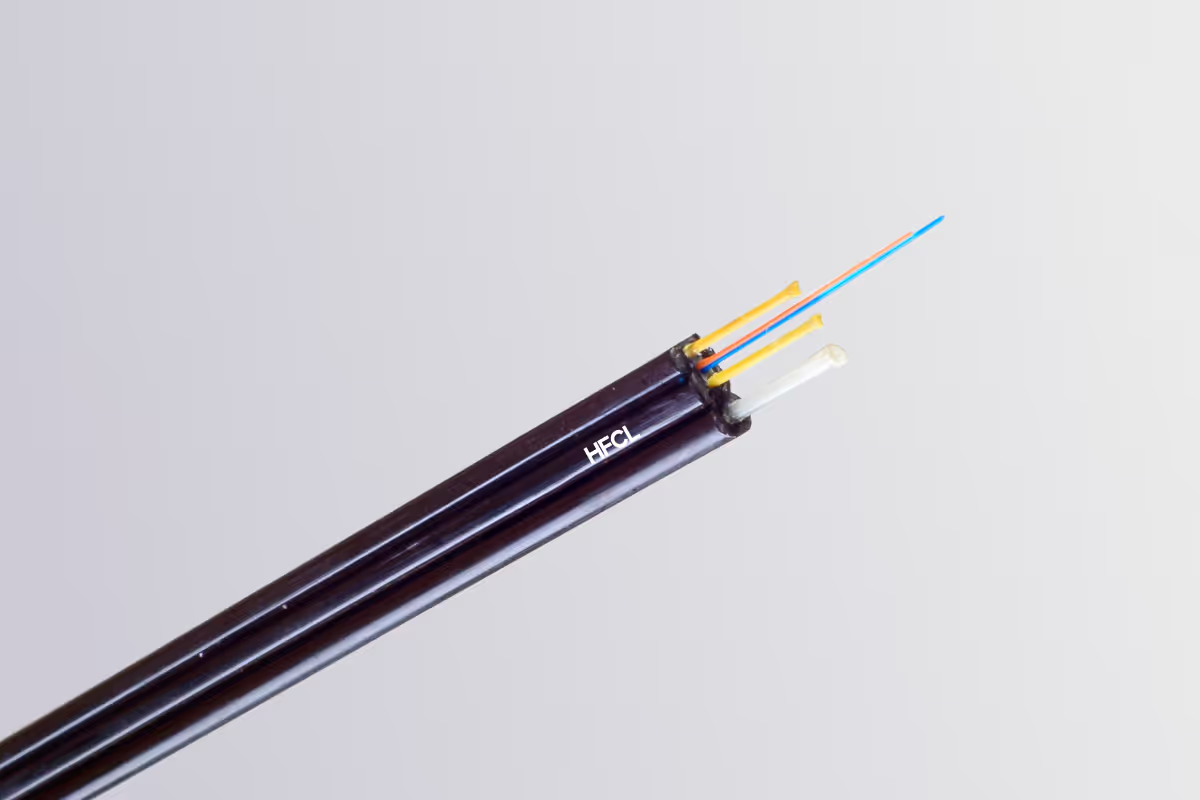
Choose our indoor drop cables for your indoor connectivity needs. Designed for seamless integration within buildings and premises, these optical Fibre cables provide reliable connections from the main distribution frame (MDF) or intermediate distribution frame (IDF) to individual network devices. With lightweight, flexible designs and flame-retardant jackets, our indoor drop cables ensure optimal safety and performance within office buildings, homes, and data centers.
FTTH Cables
Flat Drop Indoor-Outdoor Cables
No items found.
Underground Cables
Armored Cables
Underground Cables
Unarmored Cables
No items found.
Underground Cables
Intermittent Bonded Ribbon (IBR) Cable

Awards

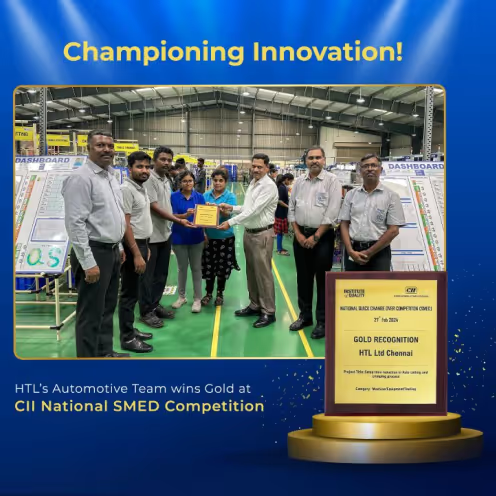
Gold Award at CII National SMED Competition (2024)

Achieved prestigious Gold Award for driving efficiency and Kaizen-led improvements in operational processes

Certificate of Excellence from Bharat Electronics (2023)

Recognized by Bharat Electronics for outstanding quality, timely delivery, and exceptional performance standards

Award by IPC India for IEMI Event Contribution (2023)
Recognized for significant contributions and collaborative efforts with IPC India industry events and initiatives

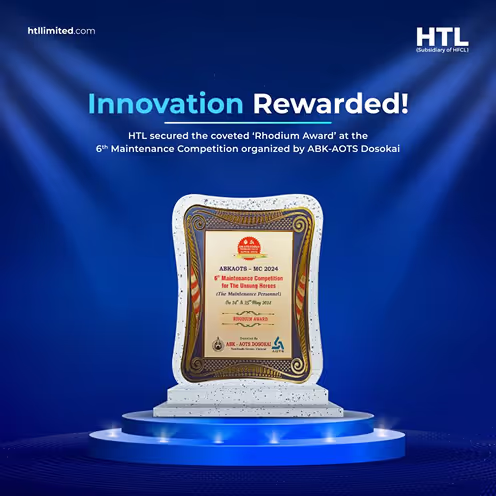
Rhodium Award at 6th Maintenance Competition (2024)

Secured first prize for fostering continuous improvement and operational excellence across manufacturing processes

NABL-accredited testing & certification facilities

Empowering Industries: HFCL's Versatile Optical Fiber Cables in Action

Telecommunications
In the fast-paced world of telecommunications, HFCL's optical fibre cables are the cornerstone of reliable, high-speed networks. Leading telecom operators rely on our technology to deliver uninterrupted services, ensuring seamless communication across the globe.
Government & Defense
For government and defence sectors, security and reliability are non-negotiable. Our optical Fibre cables provide the backbone for secure, encrypted communications essential for national security, emergency services, and critical infrastructure operations.
Energy and Utilities
In the energy and utilities industry, uptime is critical. HFCL's optical Fibre cables ensure robust and resilient connections that support the monitoring and management of essential services, from power generation to water supply, contributing to a sustainable and reliable energy grid.
Transport
The transportation sector benefits from our advanced optical Fibre solutions, facilitating efficient traffic management, real-time monitoring, and enhanced passenger services. From smart highways to connected railways, HFCL's cables are driving the future of transportation infrastructure.

Trusted by Telcos, Industries, Governments, and Network Operators Worldwide

European CPR Regulated Cables: Safety Meets Performance
Tier 1/PIA Approved Optical Fibre Cables
Europe-based In-house Team of Experts

Telling Our Tale With Numbers

37+
Years of technological excellence
200,000+
km of deployed cables
5
Manufacturing facilities with a 35 million fiber km/year yield capacity
60+
Countries in which we’re present
3
R&D centers across India
42.86 billion
Net sales in 2022

Case Studies

1 / 3

Insights

FAQ

What are the applications of fibre optic cables?

Fibre optic cables are primarily used for high-speed data transmission. They are essential in telecommunications, internet services, and cable television. Additionally, fibre optics are used in medical imaging, military and aerospace applications, and industrial networking.

What are the main types of fibre optic cables?

The three main types of fibre optic cables are:

  1. Single-Mode Fibre (SMF): Ideal for long-distance communication, single-mode fibres have a small core size that allows light to travel directly down the fibre, reducing signal loss and providing high bandwidth over long distances.
  2. Multi-Mode Fibre (MMF): Used for shorter distances, multi-mode fibres have a larger core that allows multiple light modes to propagate, making them suitable for data centres, LANs, and other intra-building applications.
  3. Plastic Optical Fibre (POF): This type is used for very short distances and is typically employed in consumer electronics and home networking due to its flexibility and ease of use.

How does fibre optic cable technology work?

Lab testing a network is a strategic, in-depth process designed to validate its performance, reliability, and security. Begin by setting clear objectives, like assessing throughput or security risks. Design scenarios that reflect real-world network usage and prepare a lab environment mirroring your network's setup. Equipping essential testing tools and execute various scenarios, closely monitoring the network's performance and its response to stress tests and security challenges. Collect and analyze data to identify any issues. Document the findings and refine the network based on these insights, ensuring the network is robust and secure for real-world demandsFibre optic cables operate on the principle of total internal reflection. Light signals are transmitted through the fibre core, which is made of glass or plastic, by bouncing off the core-cladding boundary. This allows the light to travel long distances with minimal loss and high fidelity. To know more about this incredible technology read our blog- https://www.hfcl.com/blog/optical-fiber-working-principle.html.

What are the benefits of using fibre optic cables?

Lab testing a network is a strategic, in-depth process designed to validate its performance, reliability, and security. Begin by setting clear objectives, like assessing throughput or security risks. Design scenarios that reflect real-world network usage and prepare a lab environment mirroring your network's setup. Equipping essential testing tools and execute various scenarios, closely monitoring the network's performance and its response to stress tests and security challenges. Collect and analyze data to identify any issues. Document the findings and refine the network based on these insights, ensuring the network is robust and secure for real-world demandsFibre optic cables offer several advantages:

  1. High Bandwidth: They can transmit large amounts of data at very high speeds, making them ideal for broadband internet and high-definition broadcasting.
  2. Long Distance Transmission: Low signal attenuation allows data to be transmitted over long distances without the need for frequent signal boosting.
  3. Immunity to Electromagnetic Interference: Unlike copper cables, fibre optics are not affected by electromagnetic interference, ensuring stable and reliable data transmission.
  4. Security: Fibre optics are more secure against eavesdropping and data breaches, as they do not radiate signals that can be intercepted.
  5. Durability: They are resistant to harsh environmental conditions, making them suitable for both indoor and outdoor installations.

In what sectors are fibre optic cables most commonly used?

Lab testing a network is a strategic, in-depth process designed to validate its performance, reliability, and security. Begin by setting clear objectives, like assessing throughput or security risks. Design scenarios that reflect real-world network usage and prepare a lab environment mirroring your network's setup. Equipping essential testing tools and execute various scenarios, closely monitoring the network's performance and its response to stress tests and security challenges. Collect and analyze data to identify any issues. Document the findings and refine the network based on these insights, ensuring the network is robust and secure for real-world demandsFibre optic cables are extensively used in:

  1. Telecommunications: Providing the backbone for internet services, phone lines, and television networks.
  2. Medical Industry: Utilized in imaging and diagnostic equipment.
  3. Military and Aerospace: For secure, high-speed communication and data transmission.
  4. Industrial Networking: Connecting systems and machinery within industrial settings.
  5. Broadband Internet: Facilitating high-speed internet access for residential and commercial users across the globe.

Consult with our connectivity experts

Discover how to revolutionize your connectivity infrastructure with our robust optical fiber solutions.