
About
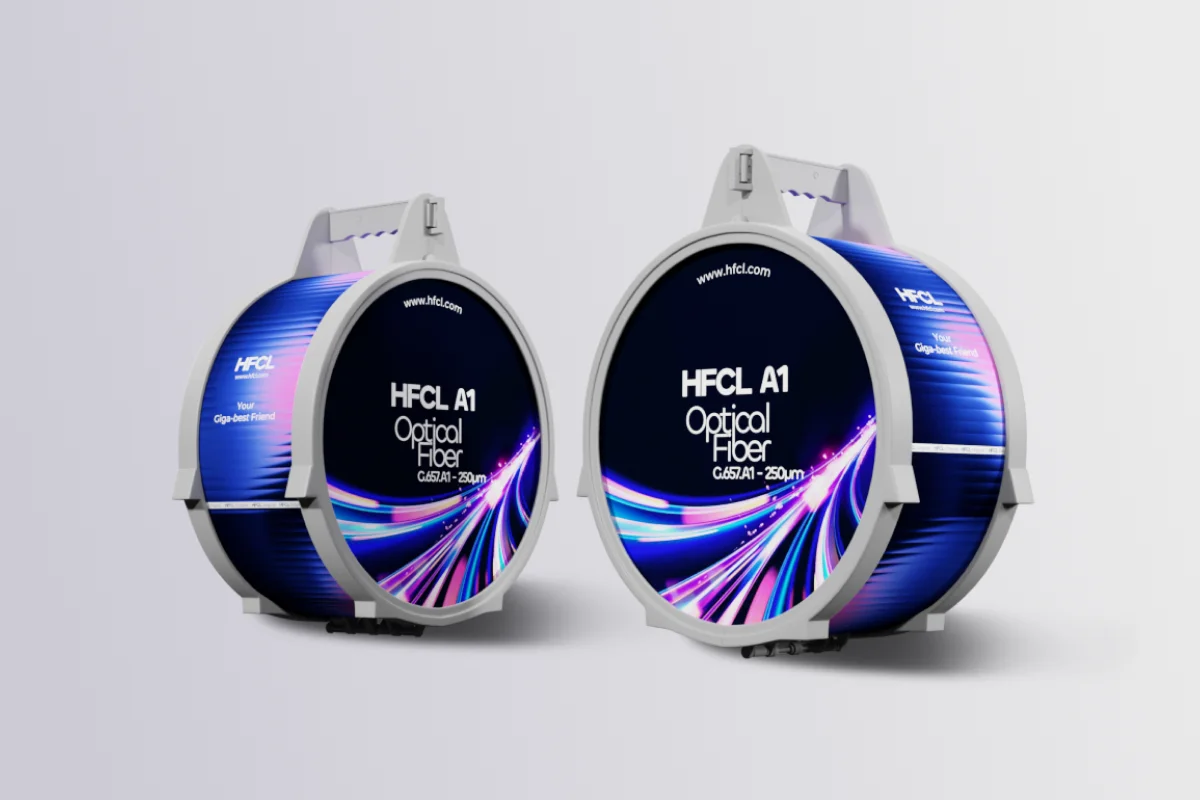
HFCL A1 optical fiber, a single-mode fiber, guarantees seamless connectivity through its enhanced bend insensitivity. Featuring low water peak attenuation across the entire bandwidth range, this optical fiber ensures uninterrupted data transmission. Its minimized macro-bend loss, splice losses, and dispersion losses make it the preferred choice for network operators seeking optimal performance. Complying with ITU-T G.657.A1 standards, flexi arch stands at the forefront of reliable and efficient fiber optics technology. Moreover, this fiber optics solution is compatible with a legacy network built with ITU-T G.652D and G.657.A1 fiber.
Features
Benefits
Bend Insensitivity
HFCL A1 optical fiber ensures uninterrupted data flow, even in tight bends, providing a resilient and durable solution
Low Water Peak Attenuation
Experience consistent high-performance signal transmission across the entire bandwidth range through this fiber optics technology
Reduced Losses
HFCL A1 optical fiber uses fiber optics technology that minimizes macro-bend loss, splice losses, and dispersion losses, guaranteeing optimal transmission capabilities
Key Specifications
Applications
- Long-haul transmission
- Metro networks
- Mobile backhaul networks
- Access networks
- FTTx networks
- Microcables
- Drop cables
Variants
FAQs
Silica or multi-component glass forms the foundation for crafting communication optical fibers, ensuring optimal signal transmission and durability.
Fiber optics communication stands out with minimal signal degradation, thin and non-flammable construction, and economical, energy-efficient operation, meeting diverse communication needs effectively. To know more about fiber optics communication read- https://www.hfcl.com/blog/optical-fiber-communication.html
Plastic-clad silica fibers present challenges due to insolubility in solvents, complicating bonding and connector applications. Excessive plasticity in the cladding makes handling difficult.
Silica's exceptional elasticity, maintaining integrity until the breaking point, makes it the preferred material for crafting optical fibers. This property ensures durability and flexibility in various applications.