HFCL IP/MPLS routers integrate into a Tier-1 operator’s live multi-vendor, multi-domain network

Added in the access and aggregation layers, running alongside five vendors in the transport path and meeting three radio vendors and the operator’s core on the existing network.
At a Glance
- The operator has selected HFCL again for the next phase of expansion
- Tier-1 Indian telecom operator, serving over 100 million subscribers
- Live network, carrying subscriber traffic throughout the integration
- Five vendors already present in the transport path, three radio vendors at the access edge
- Up to 5x transport capacity added, 360 Gbps at access and 800 Gbps at aggregation
- The operator made no design changes to its radio, its core or its transport architecture
The Customer
A Tier-1 Indian operator serving over 100 million subscribers
100M+SUBSCRIBERS
One of India’s largest telecom service providers, carrying voice, data and enterprise traffic across the country.
Its transport network runs from the cell tower to the core, across access, aggregation, circle core and national backbone. This is the IP/MPLS layer, where the routing intelligence decides how every packet travels: which path it takes, what priority it gets, and where it reroutes when a link fails. Radio capacity depends on this layer to reach subscribers.
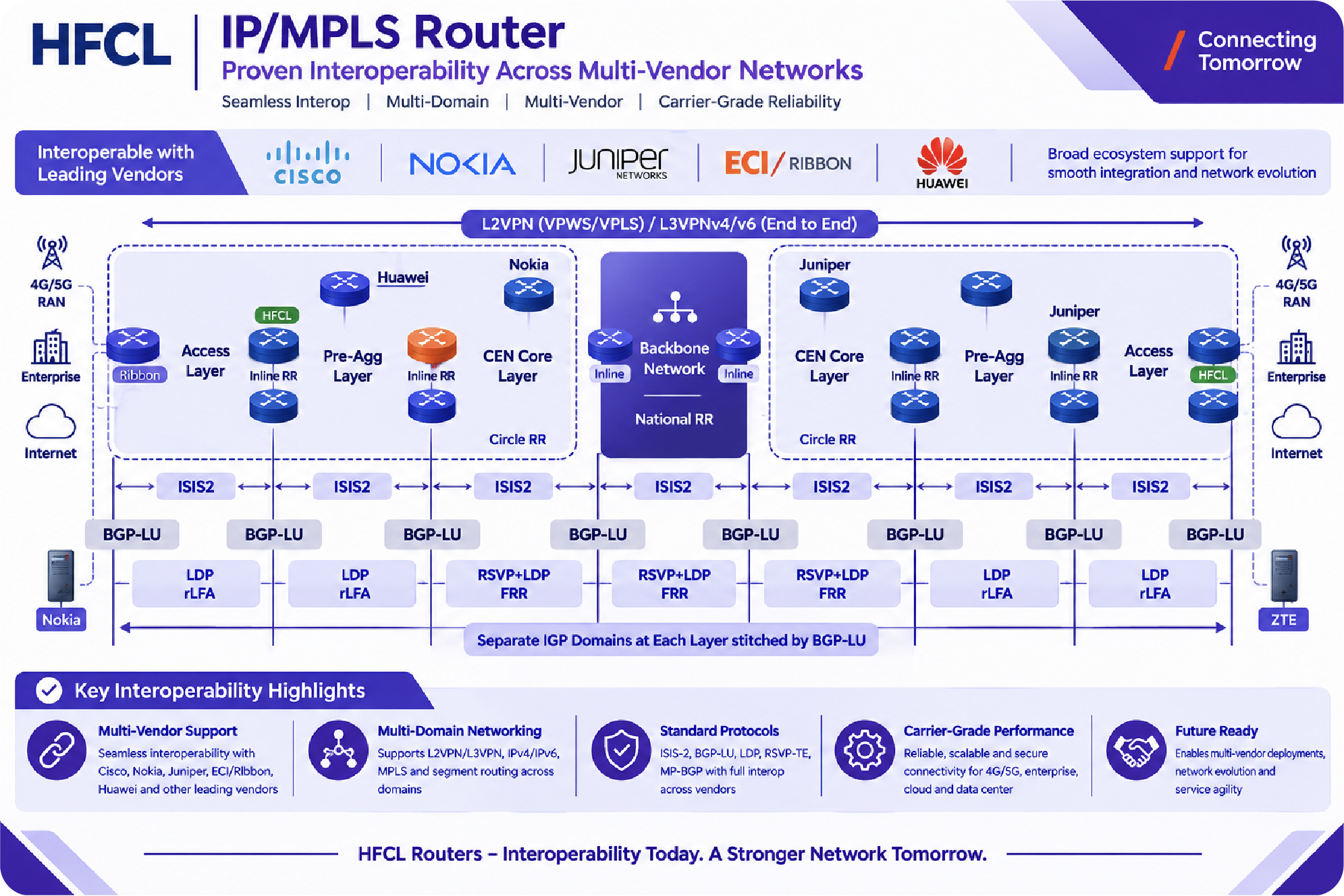
It has been multi-vendor for years. Cisco, Nokia, Juniper, Huawei and Ribbon equipment sits in the transport path, with Huawei, Nokia and ZTE radio networks handing traffic to it at the access edge. One IP/MPLS architecture runs across all of it, and every supplier in the network is held to it.
The Requirement
Increasing Transport Layer Capacity, on a multivendor network architecture that cannot be revised
The operator needed capacity at access and aggregation. That is where router count is highest, so it is where the economics of any expansion are decided. It was also broadening its supply base at those layers, deliberately and ahead of need.
The requirement came with one condition. New equipment joins the network exactly as it runs today. No design changes at the cell sites, where three radio vendors hand over traffic across thousands of live locations and every change means a site visit. None at the core and backbone, where a single edit reaches an entire circle and arrives with a change board behind it.
And none of it could disrupt service. The network carried live subscriber traffic every day of the integration, so every node added and every cutover had to land inside a planned window with services working when it closed.
The interoperability requirement, inside the IP/MPLS layer
Interoperability here meant working beside five vendors already in the transport path: Cisco, Nokia, Juniper, Huawei and Ribbon. Between a cell site and the core, traffic crosses four vendor boundaries.
Every one of those boundaries is a place where two correct implementations can behave differently. Standards leave room, and each manufacturer fills it in their own way.
So every one of those differences, across all five vendors, would be absorbed by the incoming router, in its own configuration.
The multi-domain integration requirement, at the edge and the core
Multi-domain integration is a different requirement again. It is not router beside router. It is the transport layer meeting the radio network at one end and the core at the other.
Southbound sit three radio vendors: Huawei, Nokia and ZTE. Each hands over traffic its own way. A different interface, a different way of separating services, different addressing, different priority markings.
Northbound sits the operator’s core. It accepts services that arrive with the route targets, addressing and traffic classes it was set up for years ago. Anything that does not match those does not get forwarded.
So the router would present itself three different ways to three different radio vendors, and exactly one way to the core, at the same time.
The Network
Where HFCL routers sit in the operator’s multi-vendor, multi-domain IP/MPLS path
The Approach
HFCL IP/MPLS routers configured to work inside the existing multi-vendor network
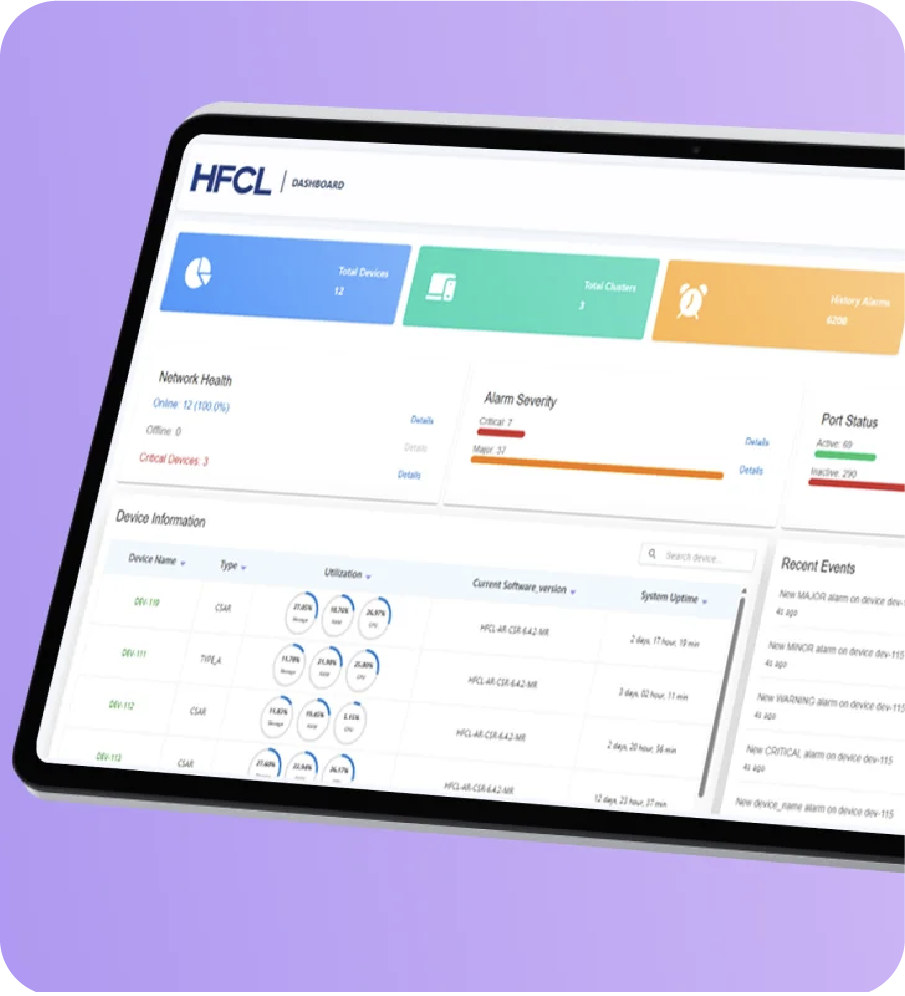
The operator’s design stayed as it was. Level structure, metric style, route target and route distinguisher scheme, QoS policy, protection design and core traffic engineering, all of it unchanged.
Work on the operator’s equipment was limited to standard enablement for a new neighbour: bringing up the peer, the adjacency and the bundle, as any addition to a live network requires.
Interoperable with five vendors inside the IP/MPLS layer
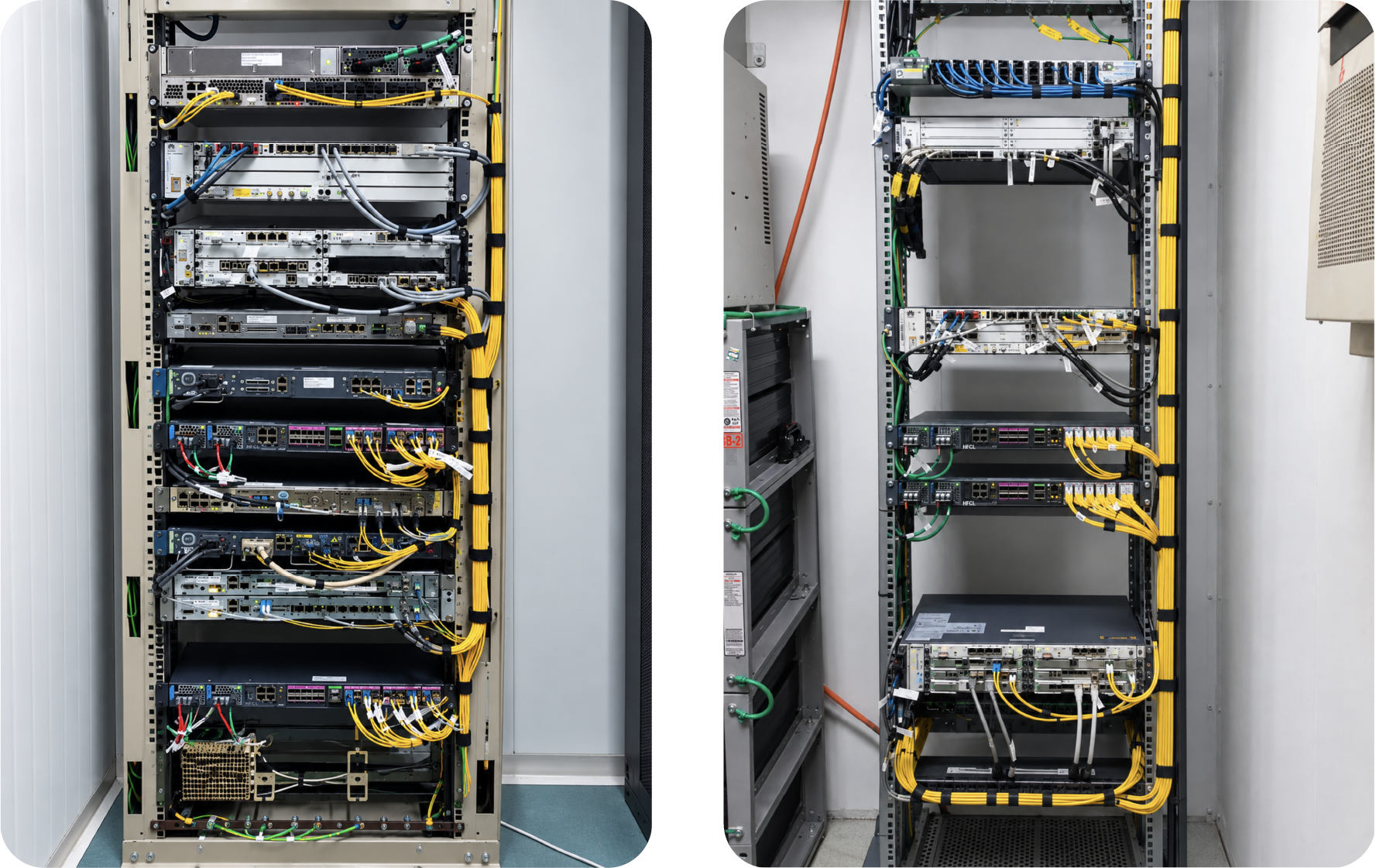
The DCR 1100 routers went into the access and pre-aggregation layers, configured to the operator’s own design, protocol by protocol.
IS-IS, per layer
Joined each existing domain on the operator’s level design, metric style, interface metrics and authentication, with overload behaviour on startup so a returning node takes traffic only once it is ready to carry it.
BGP labeled unicast
Established with the operator’s existing inline route reflectors, which belong to other vendors, with label allocation and next-hop resolution set so the end to end path builds exactly as that design intends.
LDP with remote LFA
Label distribution and local repair at access and aggregation, with repair paths validated against the operator’s real ring topology, handing over into the RSVP-TE and LDP design the core already runs.
Layer 2 and Layer 3 VPN services
VRFs built to the operator’s route target scheme, and VPWS and VPLS pseudowires with control word handling and MTU agreed with far ends sitting several layers away on other manufacturers’ platforms.
BFD
Intervals and multipliers set against each neighbouring vendor’s actual behaviour rather than defaults, with detection in hardware, so a link is declared down only when it is genuinely down.
Quality of service
DSCP and MPLS EXP mapping, queue and scheduler behaviour and tunnelling mode aligned at every handover, so the class a packet is given at the cell site is the class it keeps at the core.
Multi-domain integration to three radio vendors and the core
Southbound, the routers meet each radio vendor on its own terms. Each gets the Layer 2 or Layer 3 presentation it expects, its own separation of user plane, control plane, management and synchronisation traffic, its own addressing scheme, and its own priority markings carried through into the transport classes. Each radio service then goes into the Layer 2 or Layer 3 VPN that delivers it to the right point in the core. Clock and timing follow the operator’s existing synchronisation design. The platform carries SyncE and Precision Time Protocol to Class C with GNSS input.
Northbound, services terminate on the core using the route targets, addressing and class of service that core was already set up for. A packet leaves a Huawei, Nokia or ZTE radio and is picked up by a router presenting the exact interface that radio expects. From there it crosses five vendor handoffs on a single label switched path, built across separate routing domains, before it reaches the core, which is still running its existing configuration.
Subscriber traffic remained uninterrupted
Subscriber traffic ran on this network every day of the rollout. There was no test network to practise on. So the work went in stages. HFCL started with a small, contained part of the network, where a problem would stay in one place. On that part, everything that normally goes wrong was tried on purpose. A link was taken down and brought back. Software was upgraded on one side while the other kept forwarding. A failover was forced while traffic was running.
Those are the three moments when two vendors find out whether they really agree. Only after all three passed did the rollout move to more sites, in phases, inside planned maintenance windows, with every service checked before a window closed.
Results
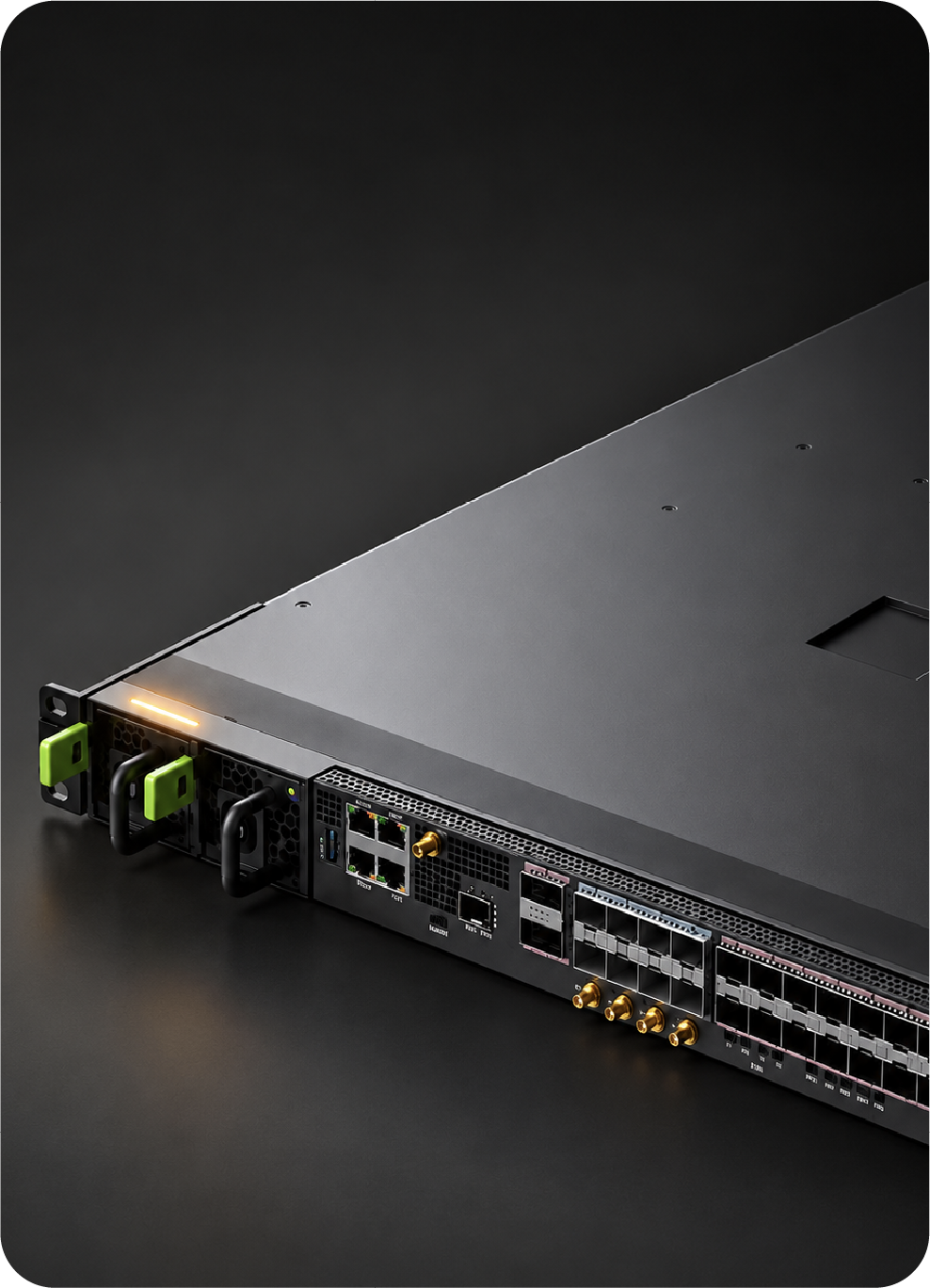
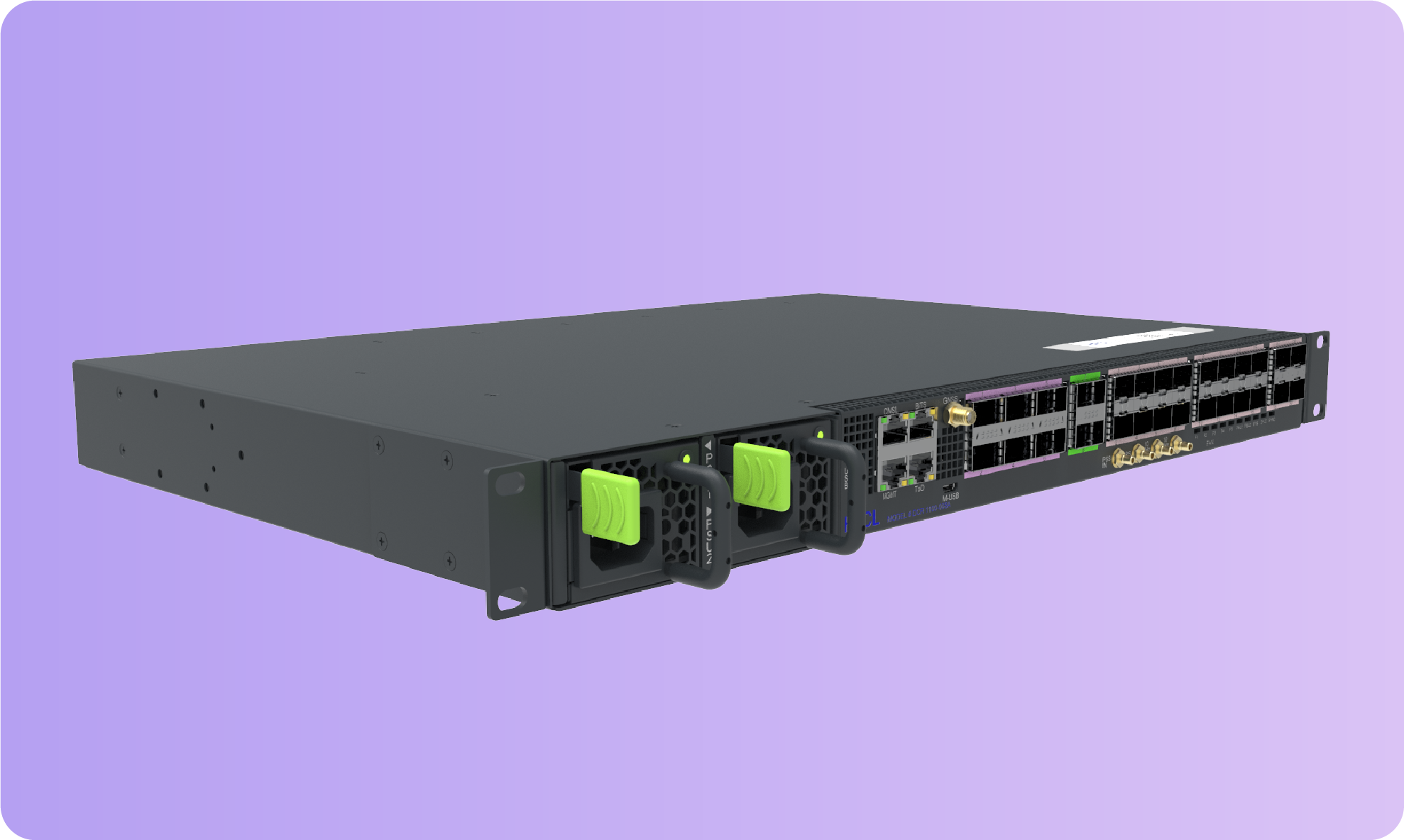
The DCR 1100 series delivered up to 5x more transport capacity, 360Gbps at the access layer and 800 Gbps at aggregation, in a 1RU platform with redundant power modules, fans and interfaces from 1 Gbps to 100 Gbps. At access sites, where rack space and power are the real constraint, that headroom arrived without a second rack or a new power feed.

The expansion stayed inside the transport layer. No work at the cell sites across three radio vendors, and nothing queued behind a core change board. The rollout kept its own dates.
The operator now has a qualified supplier at the layer where router count is highest, sourced and supported inside the country. At the next expansion, the operator has the flexibility to choose a supplier instead of defaulting back to the same one.
And the routers carry Segment Routing, so the estate going in today moves with the network when it migrates from LDP and RSVP-TE to SR-MPLS.
Why HFCL could take this on
Five things, and every one of them was checkable before any equipment reached a site.
Independently tested, not self-declared
HFCL’s routing software was examined clause by clause by Compliance International Telecom Laboratories, a TEC-designated and
ILAC-accredited laboratory. Seven protocol areas against their published specifications, every clause a pass: LDP, OSPFv2, OSPFv3, BGP-4, BGP for IPv6, Multiprotocol BGP and the IPv6 suite.
Proved before it reaches the network
HFCL runs a live multi-vendor lab in Bengaluru, holding other vendors’ platforms on the same protocol stack. That turns integration from something discovered inside a maintenance window into something settled in advance.
Eligible from day one
The DCR 1100 holds an MTCTE certificate from the Telecommunication Engineering Centre, with security testing under the Indian Telecom Security Assurance Requirements added to the same certificate in June 2025.
Under the National Security Directive, newly inducted equipment must come from a Trusted Source, making this a pass-or-fail requirement before any technical evaluation begins.
A supply line that starts in the same region as the network
Imported equipment arrives on the vendor's schedule, not the operator's. A tariff change delays a shipment. A vendor reallocates that quarter's stock to a bigger market. A container sits at customs for two extra weeks. The operator has no control over any of it, and promised customer experience takes a hit

HFCL designs, develops and manufactures the DCR 1100 in India, with country of origin and country of manufacture recorded on the same government certificate that permits its sale. What that changes, in practical terms:
Spares reach site from within the country, instead of waiting on a customs queue while a node runs without protection.
Lead times are shorter and steadier, with less exposure to tariff movement and currency swings.
Escalations reach the engineers who wrote the software, in the same working day rather than the next one.
A qualified supplier at the highest-volume layer keeps the operator’s options open on price, roadmap and delivery at the next expansion, and the one after that.
None of those are visible on a quotation. All of them show up in what the network costs to run across ten years.
A partner that took ownership of the integration
HFCL took ownership of the integration end to end: matching the existing configuration across five transport vendors, meeting three radio vendors on their own handoff, working to the core’s expectations northbound, and proving all of it before it reached a live site.
Where something needed building for this network specifically, HFCL built it, because the engineering team that owns the product is the same one on the project.